DFS25 Recap: Europe’s Digital Leap


Trust, Innovation and Sovereignty at the Digital Finance Summit 2025
Brussels once again became the beating heart of Europe’s fintech ecosystem as industry leaders, innovators, regulators and financial institutions gathered for the 10th edition of the Digital Finance Summit. Marking a decade of collaboration, this jubilee edition carried a clear and ambitious theme: “Europe’s Digital Leap: Powering the Future of Fintech.”
From AI and Payments to Regulation and Digital Sovereignty, this year's summit highlighted both how far Europe has come and how much potential still lies ahead.
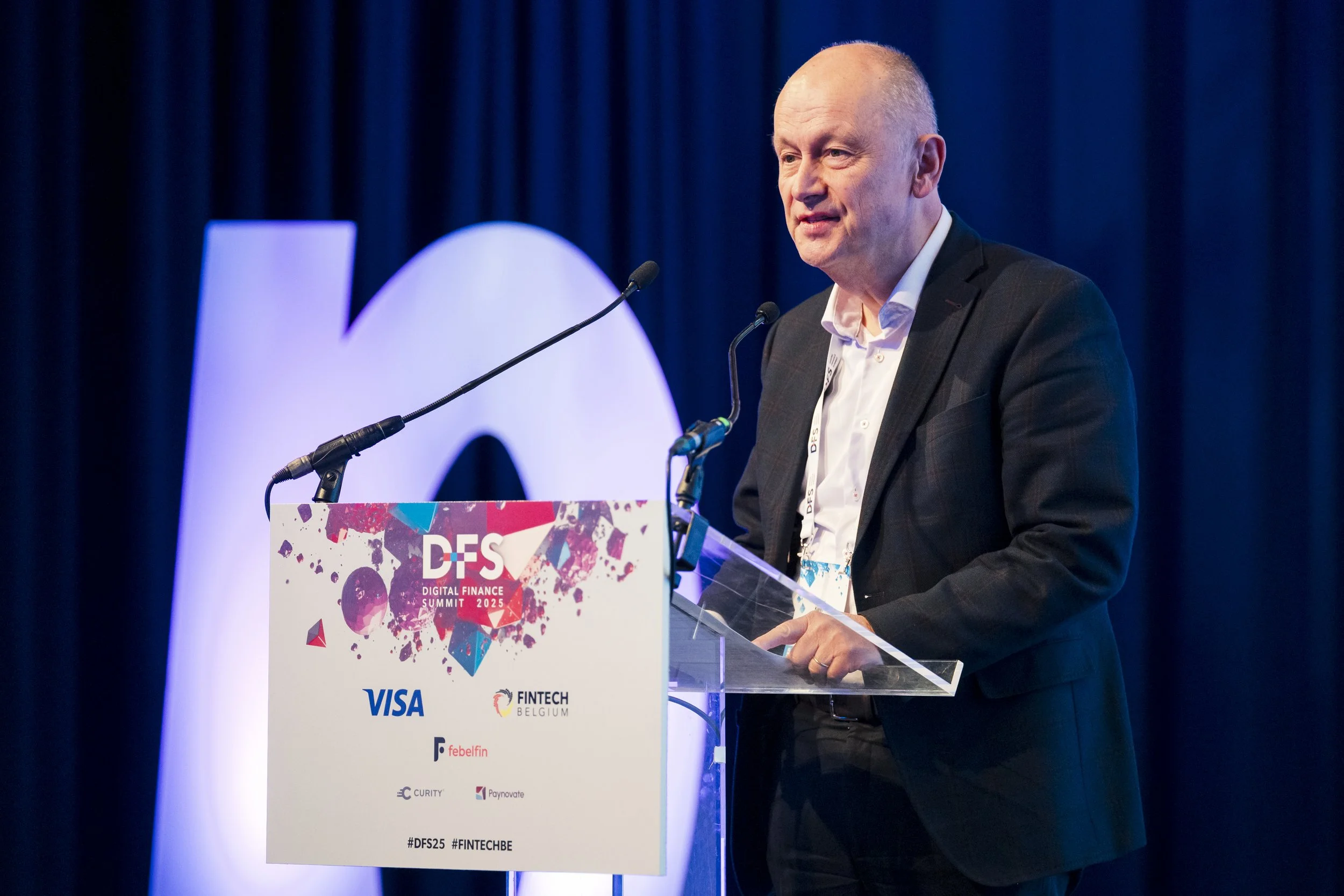
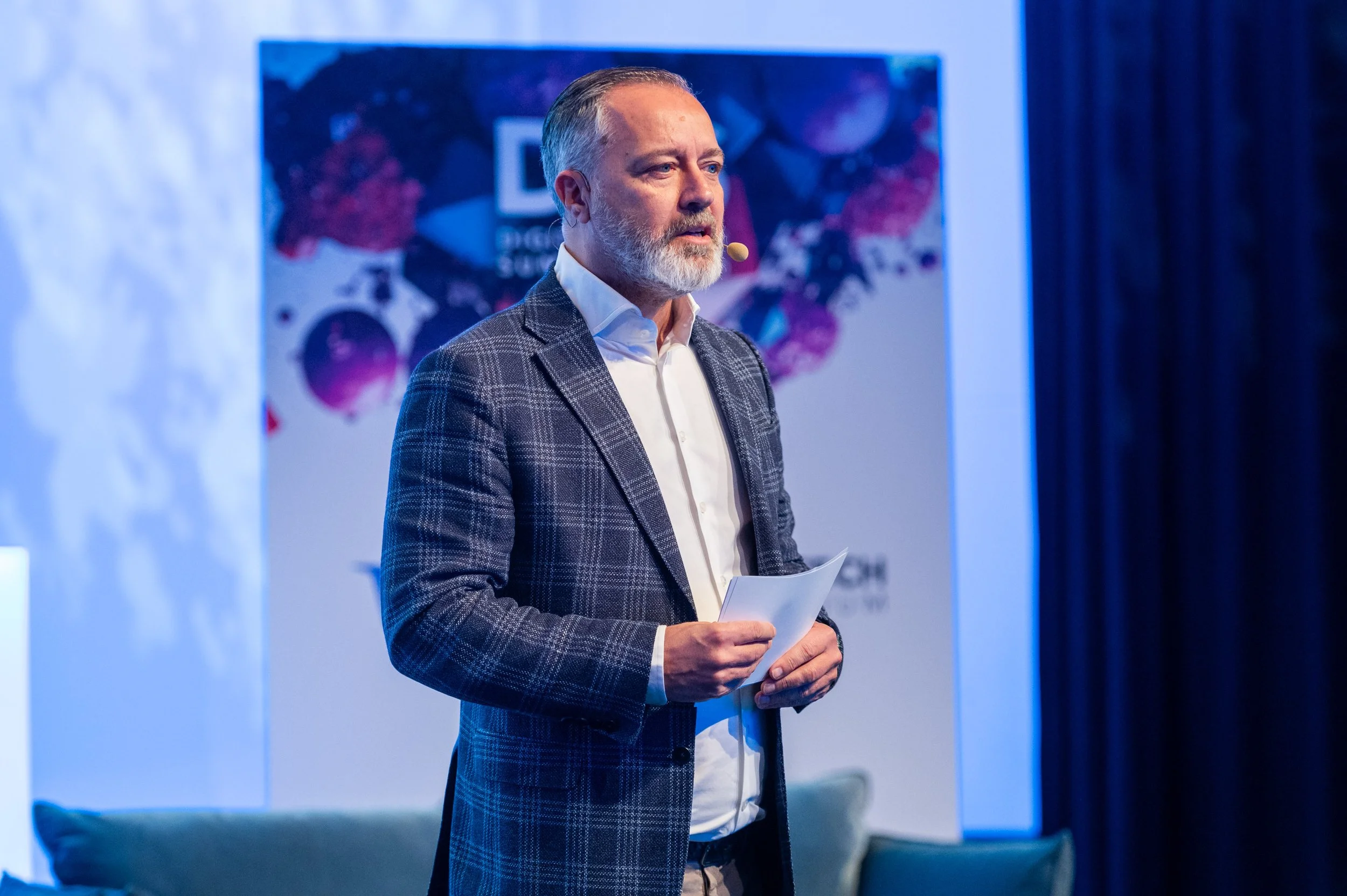
Opening the day, Toon Vanagt, the Chairman of the Board of FinTech Belgium and Managing Partner at Data.be, welcomed participants by reflecting on the summit’s journey. What began ten years ago as a meeting place for people trying to understand emerging financial acronyms has evolved into a mature, influential ecosystem.
“This didn’t happen by accident,” Vanagt noted, thanking sponsors, volunteers, board members and attendees for consistently showing up and helping the community grow year after year. The message was clear: Europe’s fintech progress is the result of persistence, collaboration and shared ambition.

The sentiment was echoed by Karel Baert, CEO of Febelfin, who emphasized that Europe already has the talent, infrastructure, and expertise to lead in digital finance — but leadership requires turning strengths into impact.
From AI-driven customer protection and seamless pan-European payments to growing cybersecurity capabilities, progress is visible. Yet challenges remain: regulatory complexity, cyber threats and sustainability pressures. According to Baert, these are not barriers but catalysts for innovation if Europe continues to collaborate across startups, scale-ups, incumbents and regulators. “Innovation doesn’t happen on its own,” he said. “It thrives in ecosystems where ideas are shared, tested and scaled.”
Throughout the morning, speakers stressed that Europe must go beyond simply digitising existing processes. Vanagt urged participants to rethink financial services entirely in a world increasingly shaped by AI, automation and agent-based systems. Paper flows have nearly disappeared. Payments are becoming instant and invisible. Human interfaces are giving way to apps and APIs. The next step argued is proof of impact, moving beyond pilots and proof-of-concepts toward solutions that genuinely change how institutions operate.
AI and particularly agentic commerce emerged as a central topic. While AI agents can already search, compare, negotiate and transact on behalf of users they raise new questions around liability, transparency and fairness. The summit therefore served as a forum to openly discuss these unresolved issues, acknowledging that technology is advancing faster than regulation but that dialogue is essential.
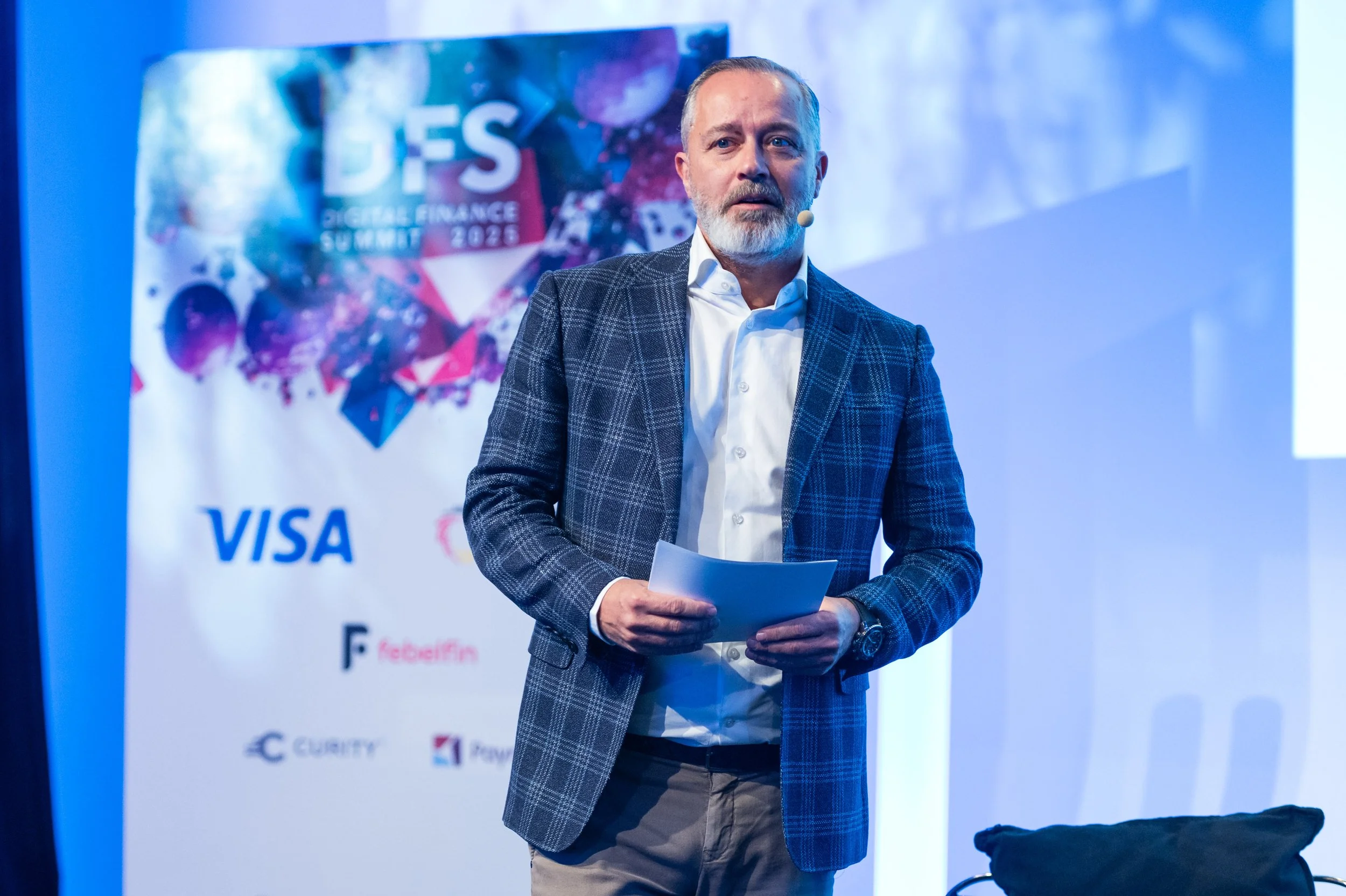
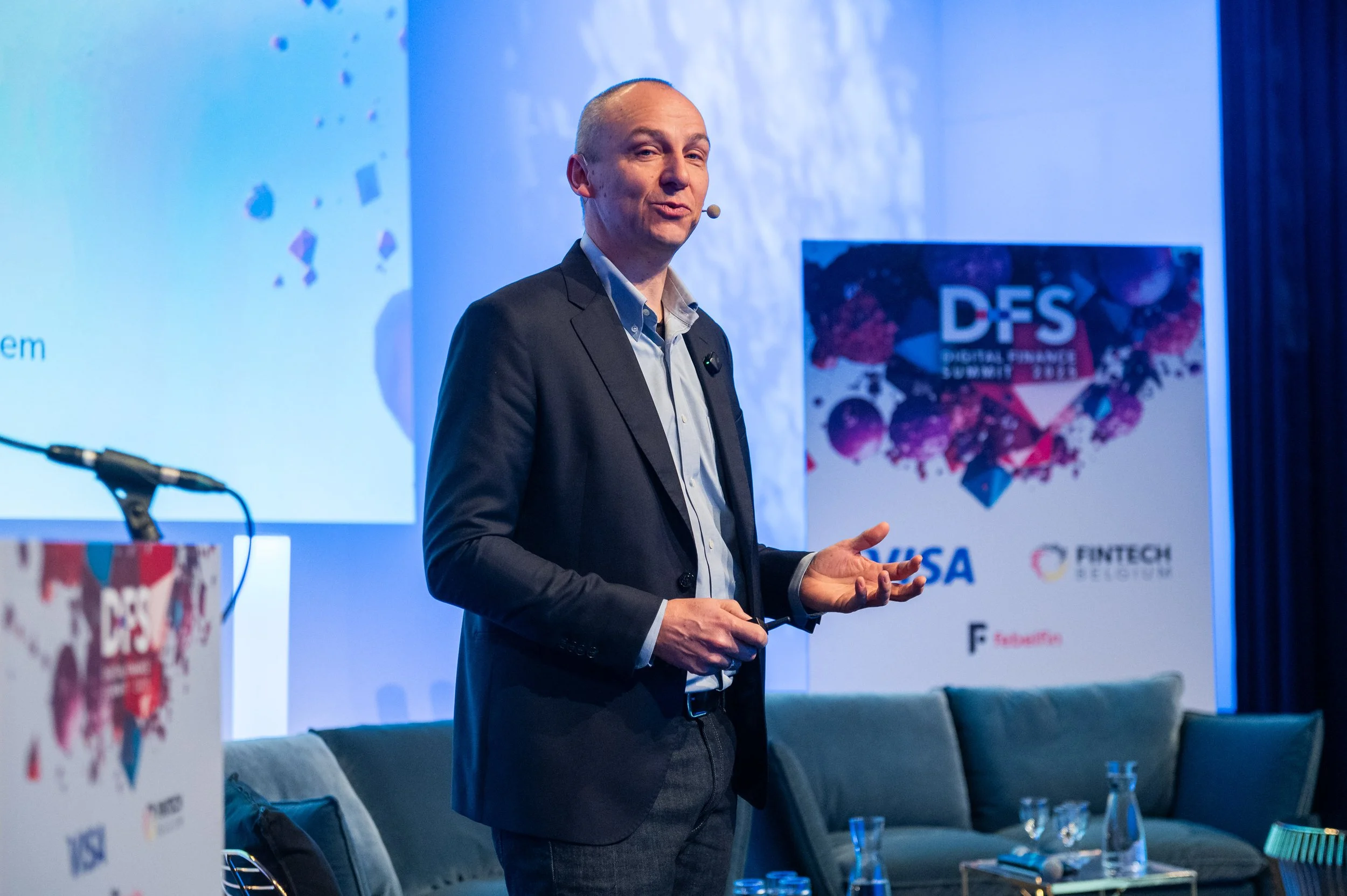
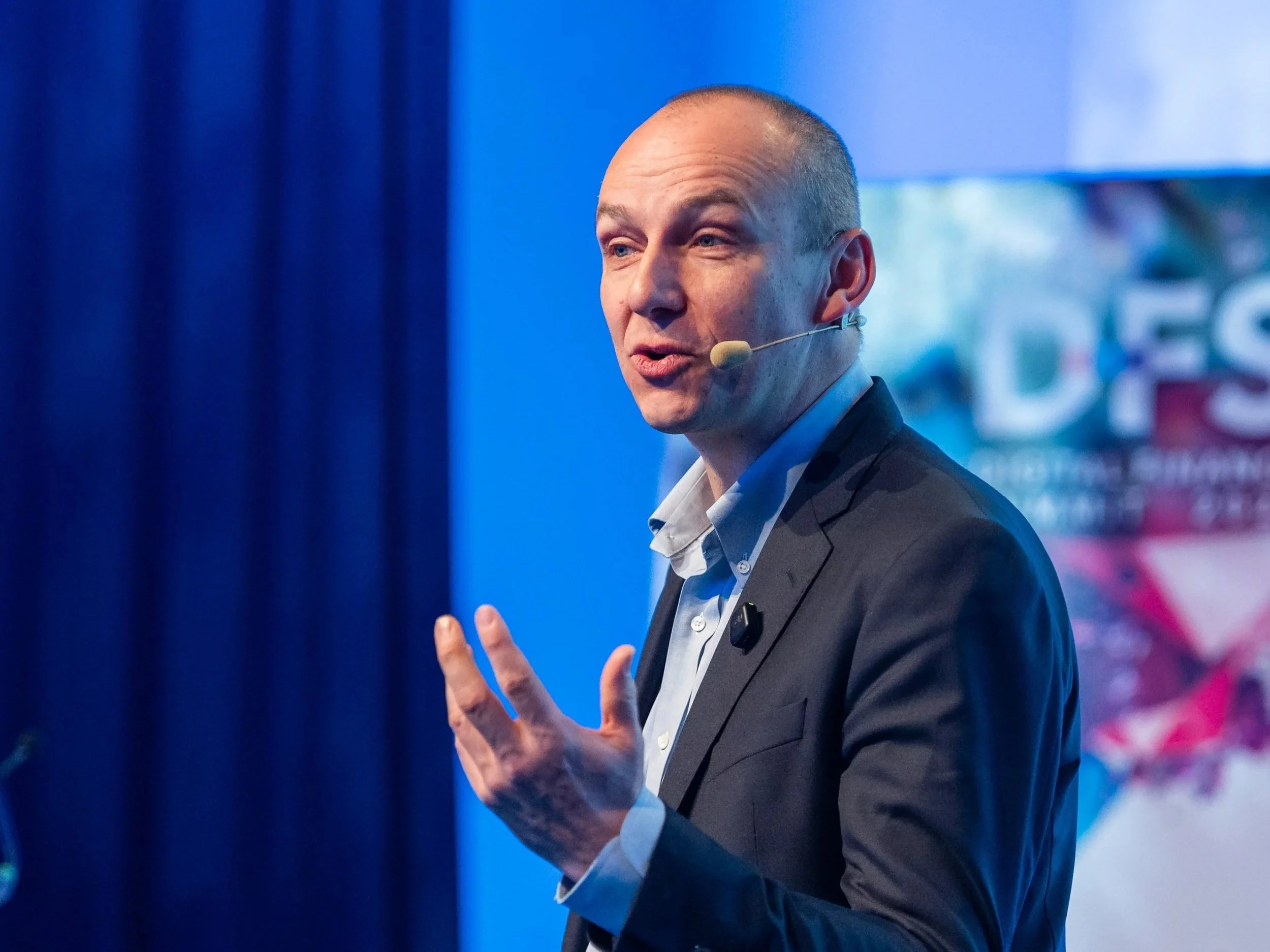
Representing Visa, Peter Theunis, Country Manager for Belgium and Luxembourg, offered a global perspective on the evolution of payments. Visa, he explained, had grown far beyond being a card brand into one of the world’s largest fintech platforms, supporting everything from B2B money movement and open banking to fraud prevention and embedded finance.
Peter outlined four priority topics
Payments without borders where cross-border transactions become the default.
Fintech for good supporting innovation, inclusion and scalable growth.
AI-driven trust especially in fraud prevention and agent-based commerce.
Digital assets and tokenisation with a goal of fully tokenised transactions by 2030.
Visa’s message aligned closely with the summit’s spirit: global capability combined with strong local ecosystems.

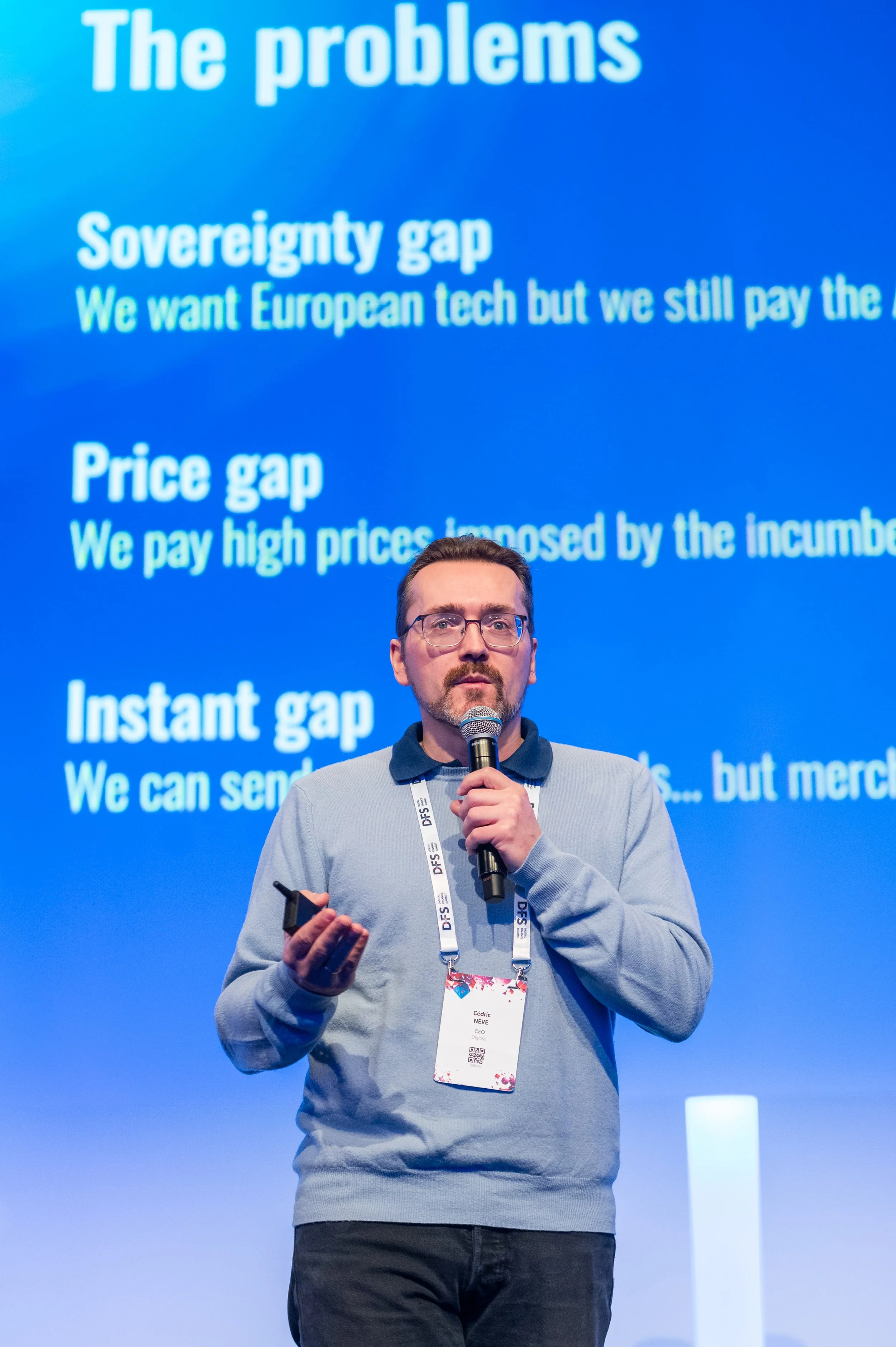
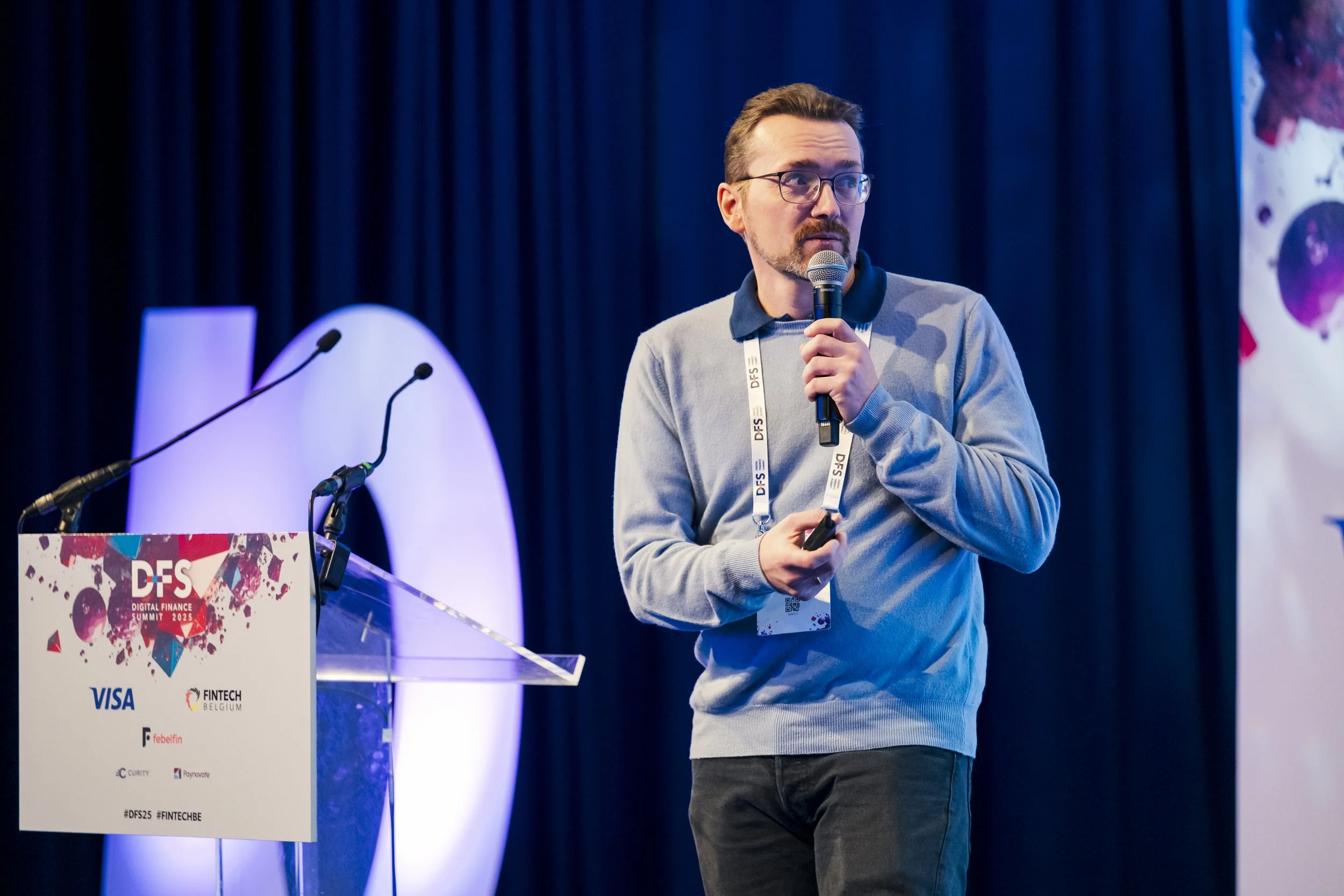
A particularly thought-provoking intervention came from Cédric Nève, who addressed digital payments from a merchant’s perspective and raised the issue of European sovereignty.
Despite regulatory progress in instant payments, PSD3/PSR and the advancing digital euro, Europe remains heavily dependent on non-European payment schemes. While these global players provide valuable services, Nève argued that true resilience requires strong European alternatives.
Three paths are emerging:
Bank led initiatives such as Wero uniting local payment systems.
Fintech driven open banking solutions enabled by new regulations.
The digital euro which is backed by the ECB with mandatory distribution and acceptance.
Rather than choosing a single winner, Nève emphasized the need for multiple solutions to coexist, compete and evolve thus ensuring sovereignty, fair pricing and instant settlement for merchants.
As the opening sessions concluded, one message resonated throughout the room: this is Europe’s moment. Not to follow global trends but to lead with confidence, cooperation and purpose.
Participants were encouraged to leave the summit with at least one concrete commitment: scaling a pilot, signing a partnership or removing a barrier to innovation. The future of digital finance, speakers agreed, was not abstract or distant. It is shaped now, through conversations, collaborations and decisions made at events like the Digital Finance Summit.
