
DFS25 Recap: Regulation- Striking the Right Balance






Striking the Right Balance between Innovation and Trust
If innovation was the promise of Europe’s digital future, regulation was the reality check and the foundation discussed during the Regulation: Striking the Right Balance session at the Digital Finance Summit. Rather than framing regulation as an obstacle, speakers and panelists explored how smart, proportionate oversight can become a catalyst for trust, scale and long-term competitiveness.

Opening the session, Christophe Majois from the FSMA offered a rare inside view of how a financial supervisor approaches innovation. His message was clear: the role of a regulator is not to promote innovation at any cost but to ensure that innovation develops in a safe, sound, and sustainable manner.
He first set the scene by explaining Belgium’s supervisory architecture, often described as a Twin Peaks model. Prudential supervision sits with the National Bank of Belgium while the FSMA focuses on market conduct, investor protection and financial products. In a highly digital environment, this division of responsibilities is not always obvious to innovators, one of the reasons the FSMA and NBB jointly launched their fintech portal.
Since its launch in 2016, the portal had received over 500 inquiries, ranging from early-stage concepts to mature business models in payments, crypto, robo-advice, crowdfunding and regtech. Many came from entrepreneurs underestimating the complexity of financial regulation or hoping to avoid it altogether. Majois noted that, “it was not the best way to start a project.” Regulation, he argued, should not be seen as a burden to escape but as a trust framework one that protects consumers, stabilizes markets and ultimately strengthens credible business models.
His conclusion resonated strongly: in a fast-moving digital world, trust and transparency are becoming the true competitive advantage.

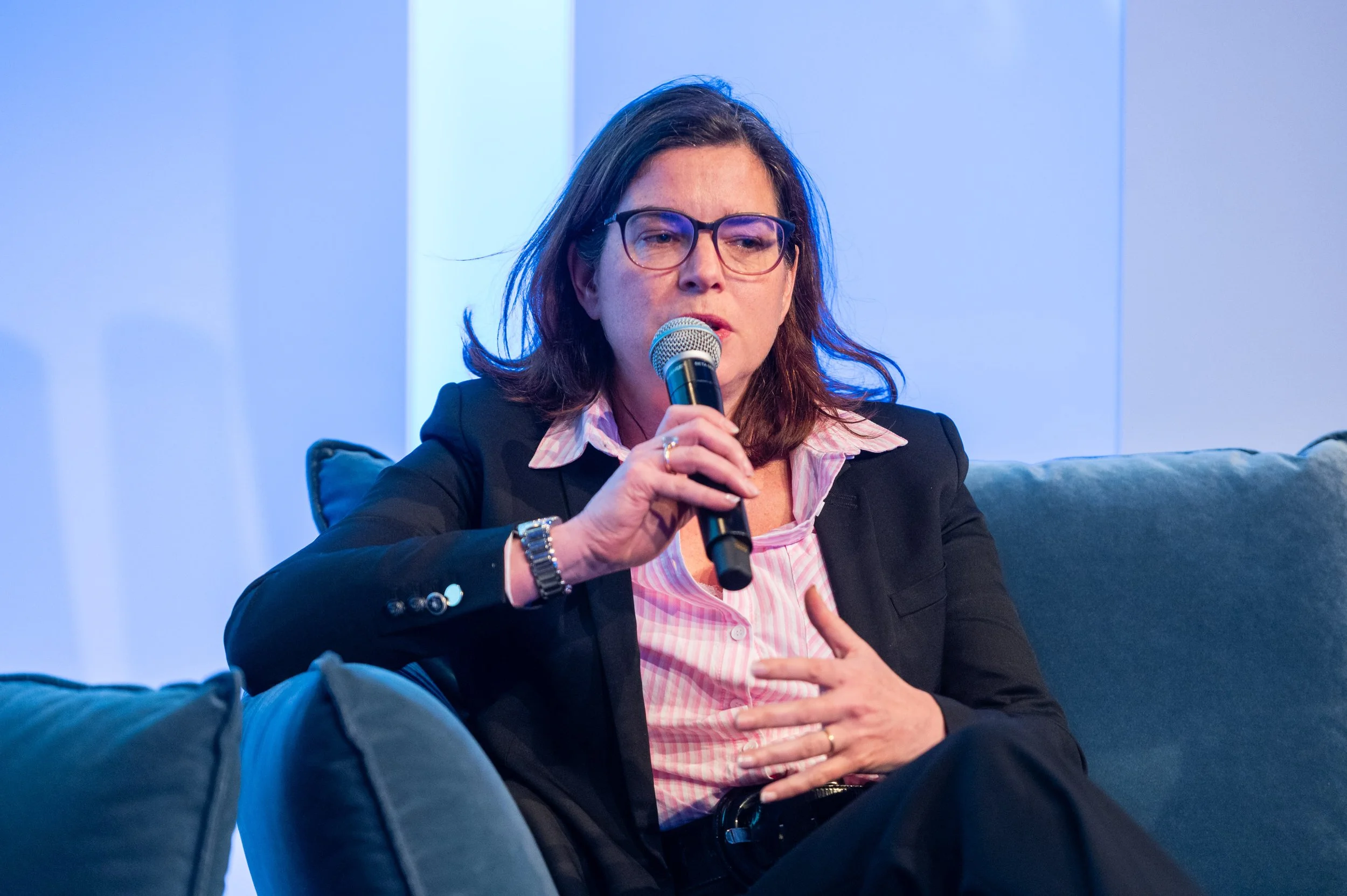
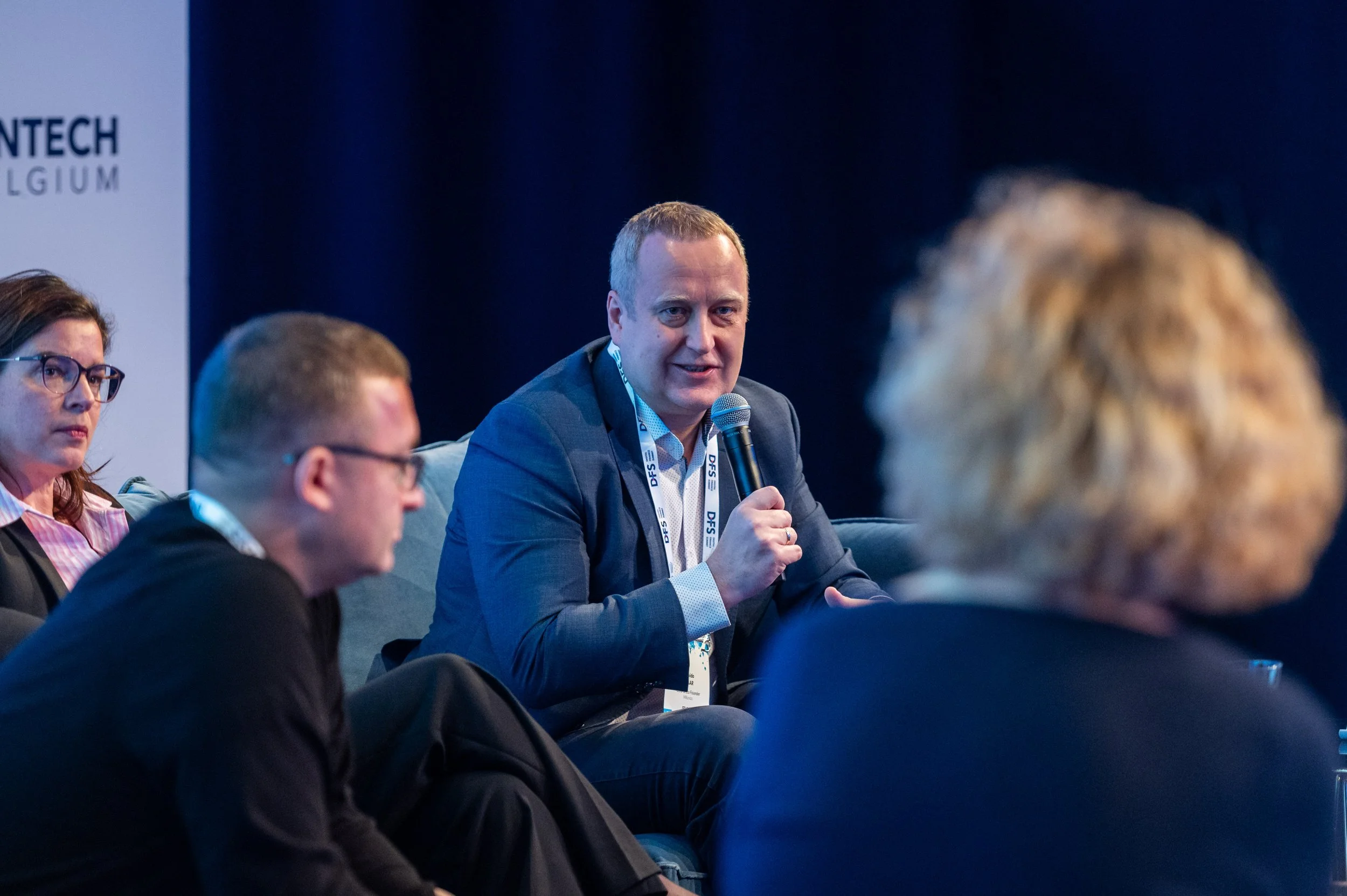
That theme carried into a diverse panel moderated by Amelie Breitburd, bringing together perspectives from fintech, market infrastructure, compliance providers, and European authorities. Despite very different business models, panellists shared a common challenge: fragmentation.
Kaido Saar, CEO of Mifundo, illustrated how regulatory fragmentation continues to limit Europe’s single market ambitions. Mifundo’s mission to enable cross-border portability of credit data confronts 27 national credit data regimes, each governed by different rules and legacy systems.
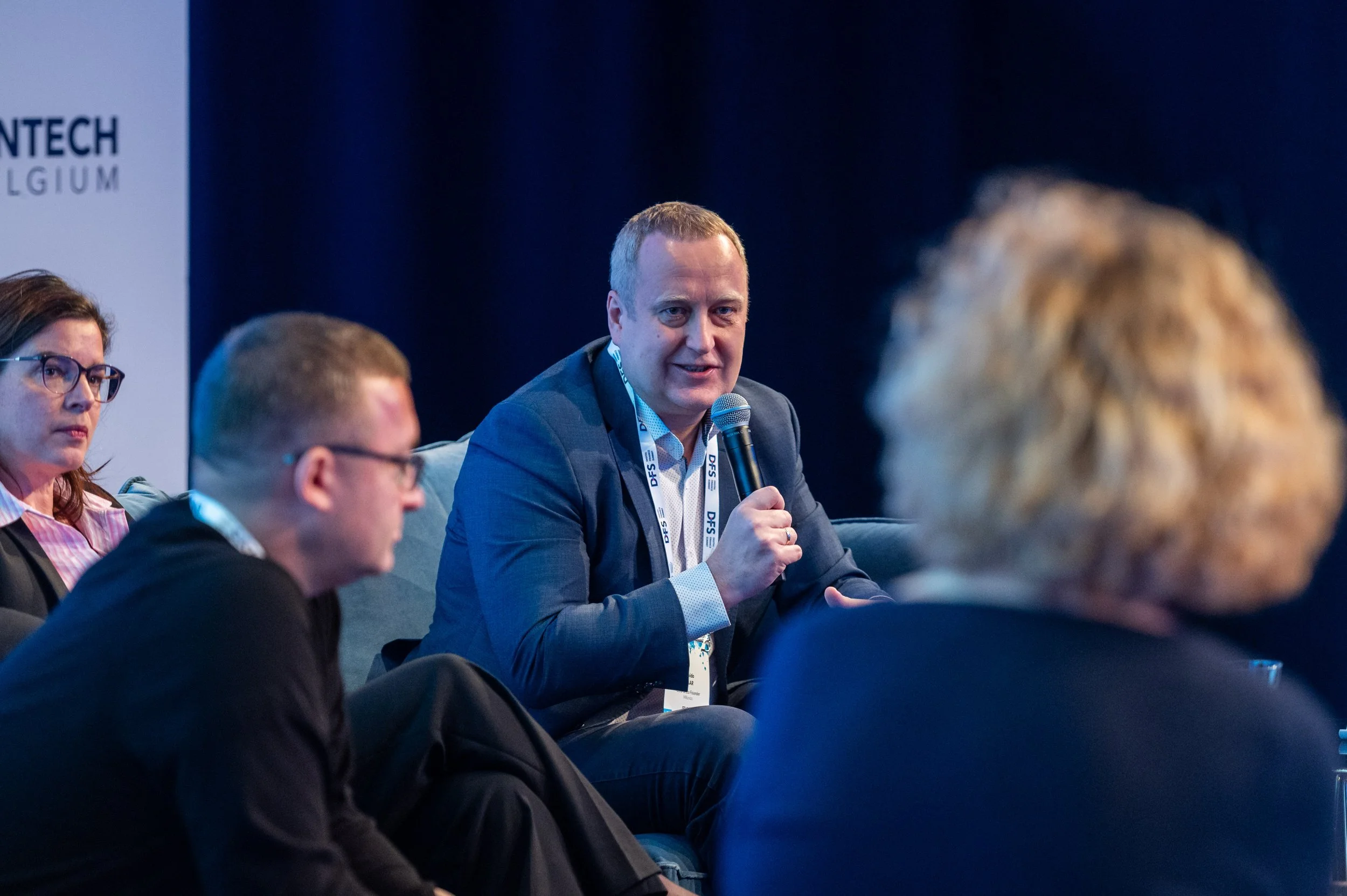
“Today, it can still be easier to physically move across Europe than to move your credit history,” Saar observed. While progress has been made and Mifundo now operates across 17 countries, the remaining gaps highlight how national regulation can unintentionally block financial mobility.
Representing a systemically important financial market infrastructure, Mireille Galeazzi from Euroclear focused on the operational reality of scale. Operating in over 45 markets, Euroclear must navigate divergent legal frameworks, overlapping regulations (such as CSDR and DORA), and supervision by more than 20 authorities.
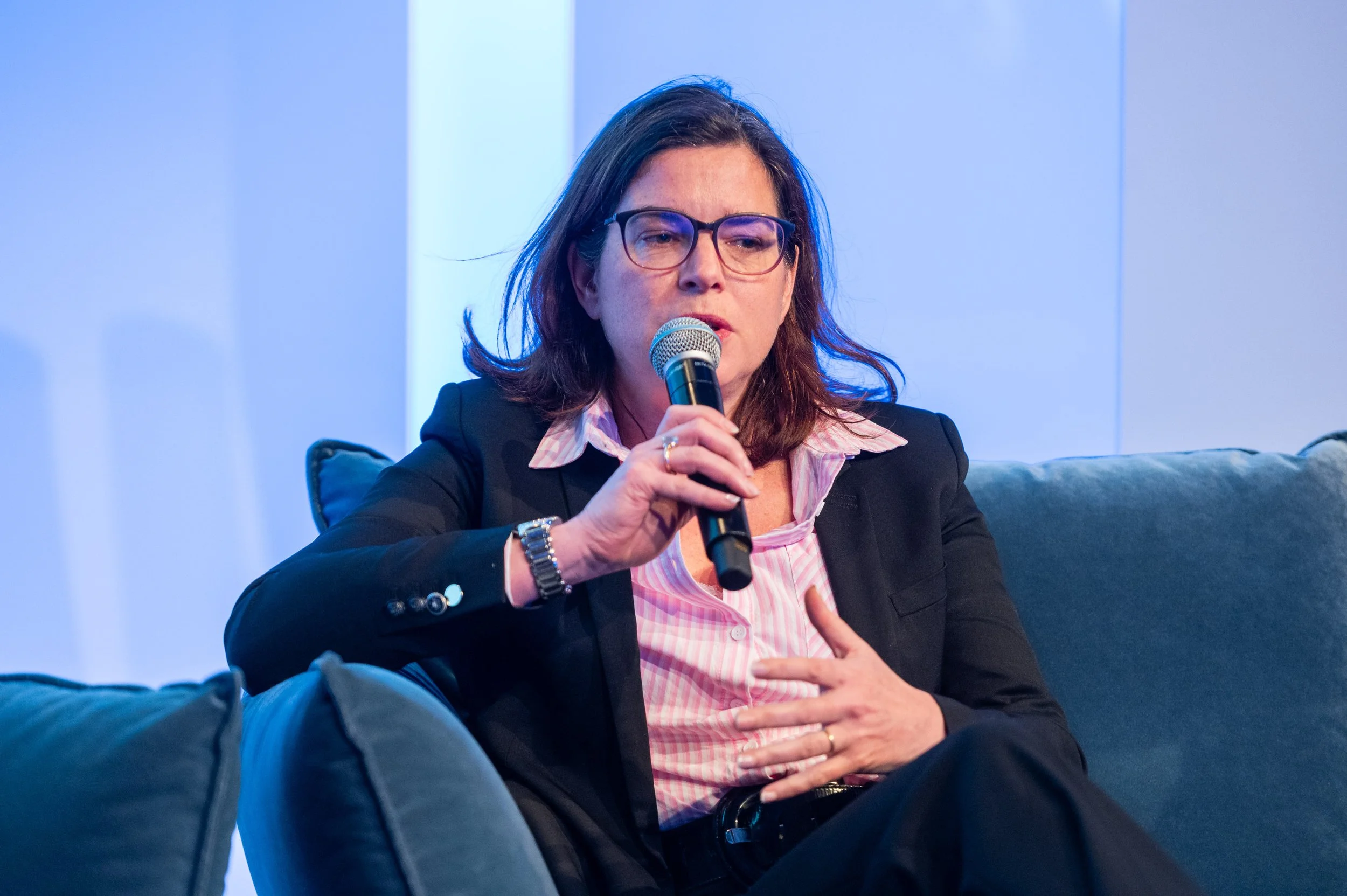
While regulation is essential for stability, Galeazzi stressed the need for supervisory convergence and reporting simplification, welcoming recent European Commission initiatives aimed at reducing duplication and administrative burden.
From a compliance practitioner’s perspective, Marko Koić of Copla reframed regulation as a matter of resilience rather than bureaucracy. Regulations like DORA or NIS2, he argued, exist because operational failures have real-world consequences.

“Compliance shouldn’t be a checkbox exercise,” Koić said, advocating for early integration of resilience and security frameworks. Done properly, compliance becomes an enabler, not a drag on growth.
Responding to these challenges, Alessia Benevelli of the European Banking Authority addressed the regulatory side of the equation. The EBA’s mandate, she explained, is not deregulation but efficiency and convergence ensuring that firms can operate consistently across borders while maintaining high standards of protection.

She highlighted the EBA’s efforts to engage directly with innovators, encouraging firms to flag regulatory and supervisory obstacles early. “Sometimes the biggest challenge is simply that we don’t know where the friction is,” she noted.
As the discussion moved from challenges to solutions a recurring theme emerged: dialogue matters as much as legislation.
Examples of regulators engaging informally with firms at events, workshops or through innovation hubs were repeatedly cited as best practice. Such interactions lower barriers, clarify expectations early and reduce the risk of costly misinterpretations later.
Sandboxes and pilot regimes were also highlighted as critical tools, particularly for bridging legacy financial infrastructure with emerging technologies such as DLT. However, panellists agreed that experimentation must ultimately reconnect with the core regulatory framework once scale is reached.
Proposals like the “28th regime” sparked interest but also caution. While optional EU-wide regimes could alleviate fragmentation, panellists stressed the need for realistic scope and gradual implementation especially in a sector as heavily regulated as finance.
What made this panel stand out was its lack of easy answers. No one argued that Europe suffers from too much regulation in absolute terms. Instead there was clear optimism. Regulators are more accessible than before. Supervisory dialogue is expanding. And both incumbents and innovators increasingly recognise that trust, resilience and innovation are not competing objectives.
Striking the right balance, the panel suggested, is not a one-off legislative act. It is an ongoing process that depends as much on how rules are applied as on how they are written.

Taking the stage next was Alexandra Maniati from the European Banking Federation, who offered a candid assessment of Europe’s digital regulatory framework from the banking industry’s perspective.
While acknowledging the ambition and necessity of recent initiatives like DORA, the AI Act, the Digital Finance Package, Maniati warned of overlaps, inconsistencies and cumulative burden. Using cybersecurity and AI as examples, she highlighted how multiple horizontal and sectoral rules can unintentionally divert resources away from the core tasks of innovation and risk management.
Her call was not for deregulation but for streamlining and proportionality: “regulation should focus on material risks, align definitions and timelines, and avoid duplicating obligations that already exist elsewhere.”
With Europe at a critical competitiveness juncture, Maniati argued that simplification is no longer optional, it is urgent.

The session closed with a thought-provoking keynote by Jos Gheerardyn from Yields, who approached regulation — particularly the AI Act — from an engineering lens. Through concrete examples of AI failures, from flawed geospatial data to biased medical devices, Gheerardyn demonstrated that most regulatory requirements mirror what good engineers already do: detect anomalies, manage bias, and prioritise risk.
His core argument was strikingly simple: “If you want to manage AI risk properly, talk to the engineers first.”
Compliance, he cautioned, should never replace genuine risk management. True balance is achieved when regulation supports proportional risk-based engineering practices rather than becoming a box-ticking substitute for them.
One message resonated throughout the session: regulation works best when it is clear, consistent and grounded in real-world practice.
Striking the Right Balance is not about choosing between innovation and oversight but about aligning them. When done right, regulation becomes not a brake on innovation but the trust layer that allows it to scale.
