
DFS25 Recap: Payments Beyond Borders




💳 Europe’s Path to Smarter, Seamless Payments
Payments have never truly been about money alone. They are about trust, access, identity and increasing experience.
The Payment Beyond Borders track at the Digital Finance Summit captured this evolution vividly moving from digital identity and orchestration to crypto-enabled commerce and finally to a wide-ranging panel on Europe’s role in the future of cross-border payments.
What emerged was a clear message: borders are no longer the main constraint fragmentation, interoperability and mindset are.

The session opened with a keynote by Joris Germonpré, Product Management Lead at itsme®, a company that did not exist when DFS was launched ten years ago yet has become embedded in the daily digital lives of millions. In just eight years, itsme® has grown to nearly 8 million users, is active on more than 3,000 platforms, and supports 30 European nationalities, including all EU member states. What began as a secure login solution has quietly evolved into a foundational layer for financial services.
Germonpré walked the audience through how identity now underpins key payment-related processes: onboarding and KYC, qualified electronic signatures, secure access to banking platforms, transaction confirmation and fraud monitoring. In Belgium, high-value payment confirmations already rely on itsme® as a second factor, while in e-commerce, itsme® is used to confirm payments within existing acquiring infrastructures.
The most forward-looking part of his intervention focused on data sharing. By positioning itsme® as a consent-driven bridge between trusted data sources (public and private vaults) and relying parties, identity becomes more than authentication it becomes a transactional enabler. Whether sharing energy performance certificates for a renovation loan or verified bank account details to set up direct debits, identity data starts to travel with the payment.
Looking ahead, Germonpré identified three forces reshaping the landscape:
the growing entanglement of payments and identity
the rollout of European Digital Identity Wallets under eIDAS 2
the escalating sophistication of fraud and social engineering
His conclusion was clear: the future of payments will require fewer steps, stronger assurance and more contextual intelligence delivered seamlessly.
Where itsme® focused on trust and identity, Inna Kostiuk, Senior Business Development Manager at Worldline Payment Orchestration reframed payments as a coordination challenge. Merchants, she argued, no longer struggle with accepting payments but with navigating their growing complexity: multiple payment methods, regulatory constraints, customer expectations and new rails such as instant payments and crypto. The answer lies in orchestration.
Tracing the evolution of digital payments from early e-commerce to today’s fragmented ecosystem Worldline Payment Orchestration positioned orchestration as the “control tower” that synchronises payment methods, providers and geographies. With over 330 providers connected through a single layer, orchestration enables merchants to optimise conversion, manage risk and future-proof their payment stack.
Her analogy was telling: just as a metro system needs central coordination to avoid congestion payments require orchestration to remain scalable and resilient.
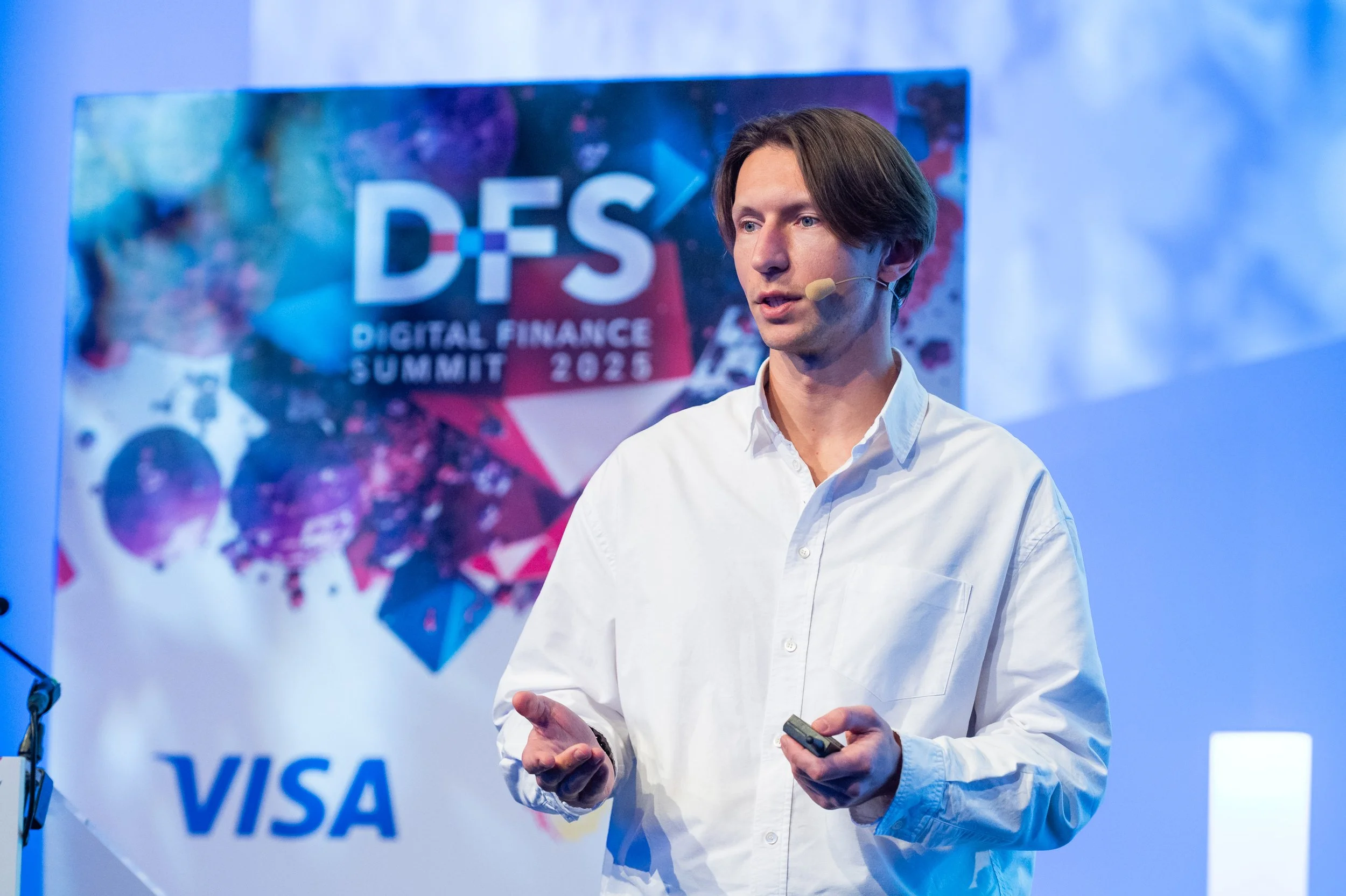
Building on this infrastructure layer, Pavlo Denysiuk, representing Lunu Pay, illustrated what orchestration enables in practice. With around 10% of the global population now holding digital assets, Denysiuk argued that crypto is no longer speculative by default, it is increasingly transactional. Lunu Pay enables consumers to pay with crypto or stablecoins at physical points of sale while merchants receive fiat directly in their bank accounts.
Behind the scenes, AML, KYC and KYT checks are performed, crypto is exchanged instantly and settlement happens in seconds. For merchants, the experience is deliberately indistinguishable from traditional card payments.
The key insight was not crypto itself but abstraction: when complex rails are hidden behind familiar interfaces, adoption becomes possible. Orchestration platforms like Worldline’s make this integration viable at scale.

Moderated by Youcef Tahari from the Payments Association EU, the panel brought together perspectives from fintech, infrastructure, and policy, challenging the familiar narrative that Europe regulates while others innovate.
Magali Van Bulck immediately challenged this framing stating that it ignores how deeply innovation in European payments has been regulation driven.
Wise itself, she reminded the audience is a product of PSD1 and PSD2. These frameworks did not merely permit innovation; they forced it by opening access, increasing transparency and reducing dependency on incumbent banks.
The Instant Payments Regulation, in her view followed the same logic: while instant payments existed in theory since 2017 only regulatory intervention ensured broad adoption.
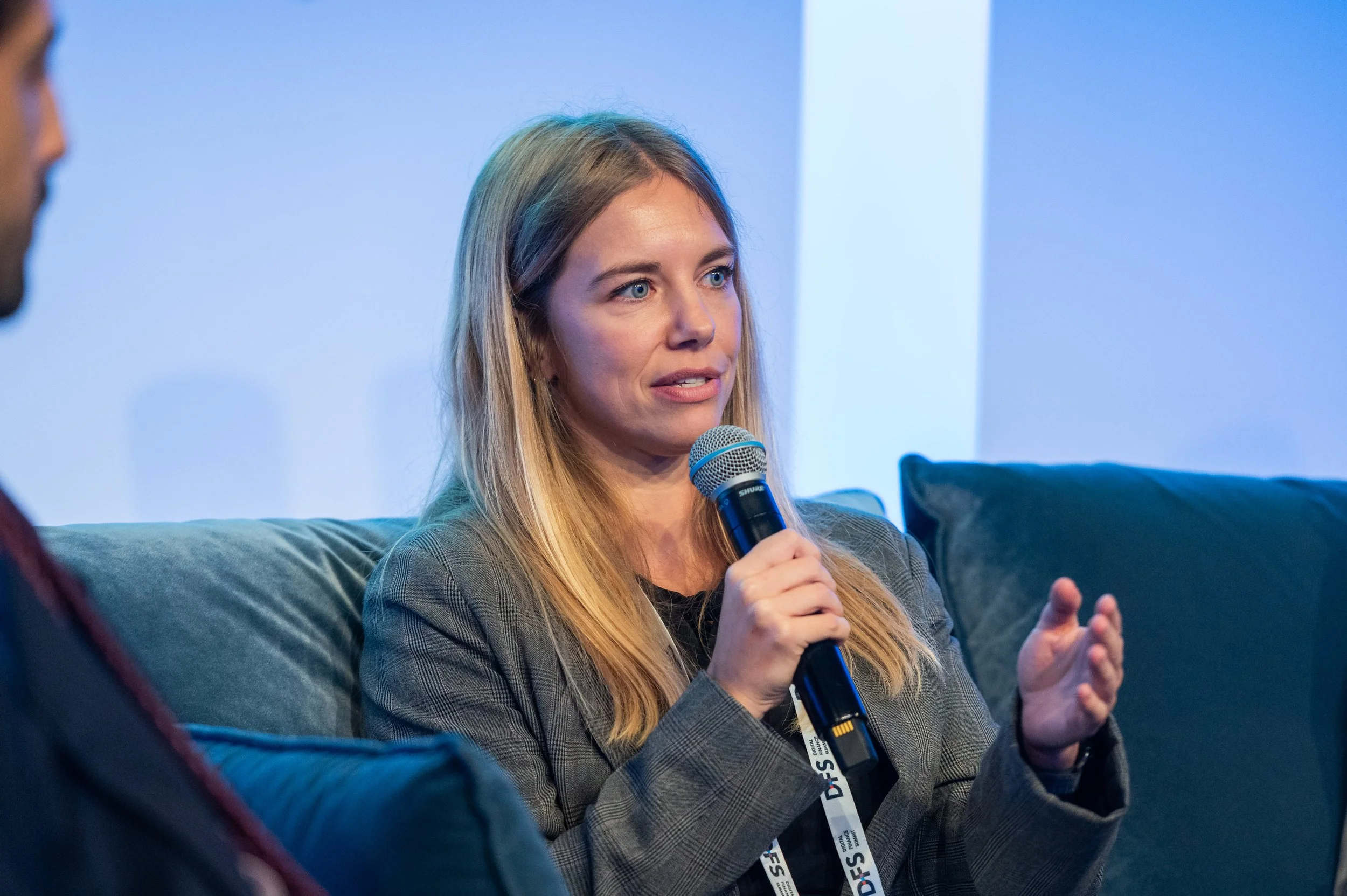
Importantly, she highlighted a structural shift that often goes unnoticed: non-banks now have direct access to payment systems. This removes layers of intermediaries, making payments faster, cheaper and more reliable particularly in cross-border contexts.
Robert Masse reinforced this position from an EMI standpoint. Payments he argued have always been regulated; what Europe did differently was innovate through regulation.
PSD frameworks created new licence types, new business models and new ecosystems many of which are now being replicated globally.

For Masse, Europe is not lagging behind but acting as a regulatory laboratory. European EMIs build operational maturity locally and then export that knowledge to markets where similar frameworks are emerging from the Middle East to North America.
Yet regulation alone does not guarantee coherence. Charles Van den Bogaert cautioned against overstating Europe’s progress. While EU-level frameworks have enabled scale, the operational reality of cross-border payments remains fragmented especially beyond the euro area.
From a B2B perspective, international payments still rely on correspondent banking chains, multiple clearing layers and opaque FX pricing. Instant payments improve euro-denominated flows but they do little to simplify transactions involving dollars, yuan or emerging-market currencies.
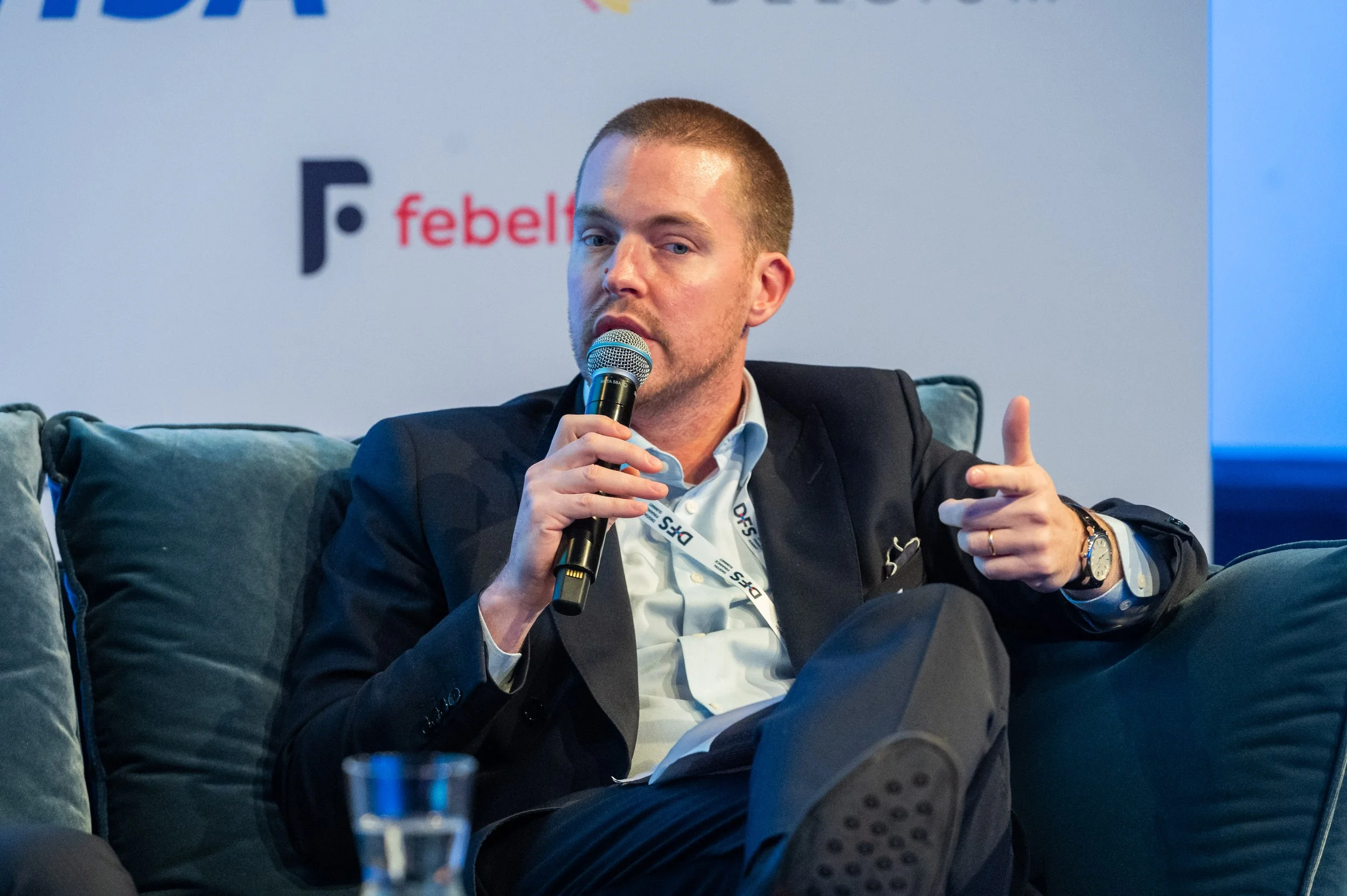
For iBanFirst, the value lies in pragmatic interoperability, interlinking instant payment systems that already exist rather than waiting for more radical overhauls such as CBDCs or fully tokenised settlement layers. Those may come, but SMEs cannot afford to wait.
This pragmatism was echoed by Sezer Arslan who warned that harmonisation often ignores context. Operating across Europe, Turkey and the MENA region, Oxivo sees first-hand how payment behaviour differs not just across borders but across use cases.
A vending machine, an EV charging station and a parking meter do not share the same constraints as an e-commerce checkout. Payments Arslan argued are behavioural and regulation must adapt to how people and machines actually transact.
The discussion then turned to instant payments widely seen as Europe’s flagship achievement. Van Bulck described instant payments as a mindset shift. Once speed becomes the default, consumers stop accepting delays and stop paying extra for urgency. This normalisation creates a foundation on which new services can be built including interoperable wallets like Wero and national schemes such as Bizum or Blik.
However, the panel was careful not to romanticise instant payments. Van den Bogaert and Masse both stressed that instant does not mean universal. Euro instant payments still represent a narrow slice of global payment flows. They are a meaningful step but not a solution to the structural complexity of international trade.
Moreover, instant payments raise uncomfortable questions around fraud. A pointed audience intervention reframed the debate: does instant payment inevitably mean instant fraud especially across borders?
The panel rejected this determinism but acknowledged the tension. Masse noted that faster payments reduce the window for manual checks, shifting the burden toward automated systems and risk models. Historically, payment systems have traded convenience for control and instant payments continue that trend.
Van Bulck added an important nuance: domestic only fraud detection underperforms. In Wise’s own testing, models trained on cross-border data consistently outperformed those limited to national datasets. Fraud is inherently transnational; preventing it requires cross-border intelligence and data sharing.
This raised deeper questions about data governance. While Europe champions privacy and data protection, overly rigid silos can undermine fraud prevention. If verification of payee, AML signals or scam patterns stop at EU borders criminals will simply route around them.

Arslan broadened the point further, arguing that trust systems need time. Tokenization, AI-driven anomaly detection, and contextual authentication will mature, but regulation must allow experimentation without re-introducing excessive friction. Despite the challenges, the panel converged on one conclusion: Europe retains a strategic opportunity if it acts deliberately.
For EMIs like Paynovate, Europe is a proving ground where complex payment stacks can be built, tested and refined before global expansion. For fintechs like Wise, Europe’s regulatory clarity enables consumer trust at scale provided it remains interoperable and outward-looking. For infrastructure players like Oxivo, Europe can lead by embracing contextual, machine driven commerce without imposing consumer centric rules on non-consumer environments. And for platforms like iBanFirst, Europe can show that incremental, interoperable progress beats theoretical perfection.

The Payment Beyond Borders session made one thing clear: the future of payments is not defined by a single rail, regulation or technology. It is shaped by how identity, data, orchestration and infrastructure converge to make payments simpler, safer and more inclusive.
Europe’s opportunity lies not in choosing between regulation and innovation but in aligning them and in thinking cross-border from the very beginning.
